
Grounded Intelligence: Making AI Work for India's Smallholder Farmers
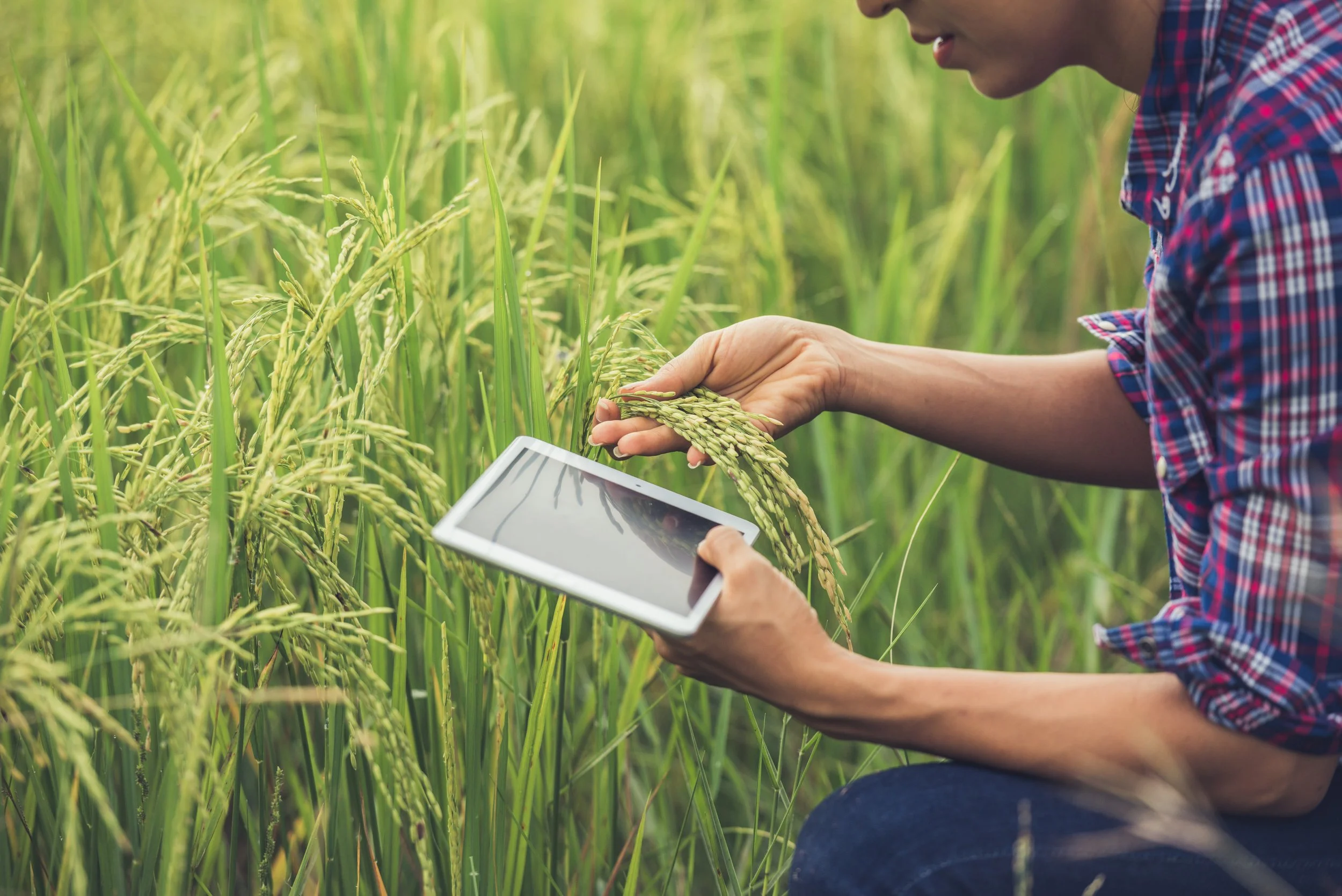
Artificial intelligence (AI) is increasingly being positioned as a key enabler for Indian agriculture, especially for smallholder farmers. In pilots and field trials we have seen AI tools perform multiple functions such as providing crop advisories over an app, identifying disease through smartphone cameras, and nudging farmers on sowing dates and inputs based on weather signals. The question for those of us working in agriculture, however, stays fairly simple: do these innovations actually help farmers in the field, season after season, once the pilot teams leave? So far the answer is mixed. Some tools are delivering real benefits; others look good in presentations but fade out in actual use. The note below stitches together field visits, programme work and ecosystem conversations to unpack why this gap between promise and practice is still so wide, and what it would take to narrow it.
At the level of access, farmer adoption of AI tools is shaped by a set of inter-linked barriers. High costs of smartphones, data plans, sensors and subscription services sit uneasily with seasonal cash flows, and there are still relatively few pay-as-you-go financing options beyond grant-supported pilots. Connectivity gaps and unreliable power interrupt cloud-based applications even when farmers are willing to use them. Digital literacy and language barriers mean that most farmers are more comfortable with voice calls or WhatsApp-mediated messages than with dense dashboards or apps that require multiple steps to navigate. Trust also builds slowly in the absence of local intermediaries or crop-specific, demonstrated results. With support from an on-ground development organisation, farmers may test a tool for one season, but often revert to previous practices when asked to continue on their own, especially if they do not see clear value in terms of yields, costs or risk. This trust dynamic is visible in day-to-day information flows. Farmers continue to rely first on local extension workers, trusted input dealers and experienced neighbours. AI-enabled tools are used as an extra source of information rather than as standalone decision systems. Digital advisory services gain traction when they are introduced through these existing support structures, offer advice that is both location-specific and consistent with what farmers observe in their fields, and are delivered in local languages and dialects. Under those conditions, farmers are more likely to follow the recommendations and to share them with peers. Where the advice is generic, comes from an unfamiliar application, or directly contradicts guidance from local actors, farmers tend to treat it as a secondary opinion.
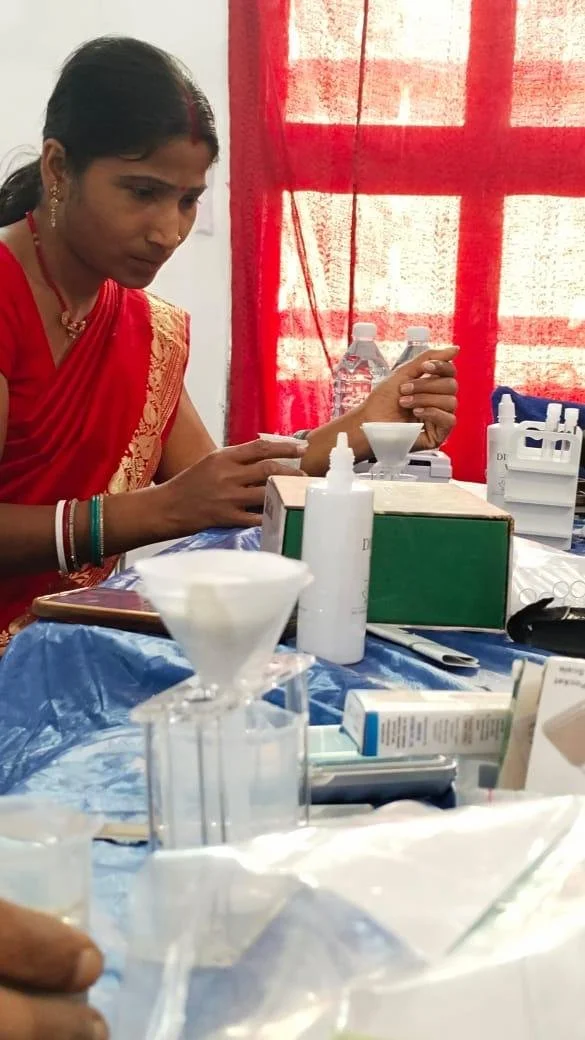
Digital crop nutrition tool to guide fertiliser use, processing soil sample with AI anabled tech.
We have seen a similar pattern in our own field work. In one of the pilots under the Evergreen Innovation Platform, farmers used a digital crop nutrition tool to guide fertiliser use across paddy, onion and cucumber. Compared to control plots, treated plots showed clear improvements: paddy farmers in Palghar and cucumber farmers in Thane recorded significant yield gains, onion farmers in Sinnar saw higher bulb weights, alongside meaningful fertiliser reductions across all farms. These are exactly the kind of results that make AI‑enabled tools look compelling in demonstration settings. Yet when the project team stepped back and farmers were expected to use the app independently, regular use dropped sharply. Many were comfortable implementing recommendations as long as someone came to the field, did the scans and explained the advisory, but did not continue on their own once that support ended. This experience underlines the same point that technology can work agronomically, but without a delivery model, incentives and support systems that fit farmer’s ground situations, it struggles to sustain itself beyond the pilot phase.
A related set of challenges lies in the data on which AI tools are built. Government systems such as DES, IndiaStat and ICRISAT routinely track area, production and yield for millets, pulses and oilseeds across districts and seasons, so base data exists for many of the crops that matter to smallholders, including finger millet, chickpea, tur, groundnut and mustard. The problem is that the curated, high-resolution datasets powering most AI applications like satellite imagery, computer vision models, soil and crop health algorithms are still concentrated around a narrower set of crops such as rice, wheat, sugarcane and cotton. Commercial pilots tend to prioritise high-value, data-rich value chains where returns are faster and labelled datasets are already available. Advisory tools therefore work reliably for major cereals but provide relatively generic recommendations for more diverse, lower-margin smallholder cropping systems. This limitation becomes particularly clear in image-based disease detection. When a farmer points a camera at a diseased finger millet plant and asks an app to diagnose it, there is a fair chance the underlying model has never really seen that crop, in that soil type, under that light, because it was trained mostly on images from wheat or maize fields far away. That does not mean AI cannot support these crops, it simply means we have not invested enough in the right kind of data. Actively commissioning labelled images and localised models for these data-light crops is essential, instead of assuming that tools built for a few dominant value chains will automatically transfer to the rest.
Questions of data ownership sit on top of these technical gaps. In practice, there isn’t a single clear answer today to who owns the data generated when farmers use AI platforms. Many private AI and digital platforms position companies as data owners through terms of use that grant wide rights to store, analyse and monetise farmer data, leaving farmers with limited practical control unless contracts explicitly say otherwise. On the public side, initiatives such as AgriStack and the IDEA framework place farmer registries with state governments and intend that personal data be shared only with consent under the Digital Personal Data Protection Act, with farmers able to decide when and how their data is used. The direction of policy is more farmer-centric, but how this plays out in actual contracts, consent flows and grievance mechanisms on the ground still remains to be seen.
Economic impacts reflect these choices around both data and business models. Across multiple pilots, AI tools have shown they can lift yields and reduce unnecessary input use for farmers. At the same time the way many current offerings are structured means a large share of the resulting value flows upstream to agribusinesses, digital platforms, lenders and input companies. Data, pricing power and bundled services-including inputs, credit, insurance and logistics-tend to sit with larger actors. If we do not pay attention to this design, farmers will continue to see only modest gains while those upstream capture most of the upside. Deliberate choices around farmer-owned data, fair and transparent contracts, clear pricing and stronger FPOs are needed to maintain a balance.
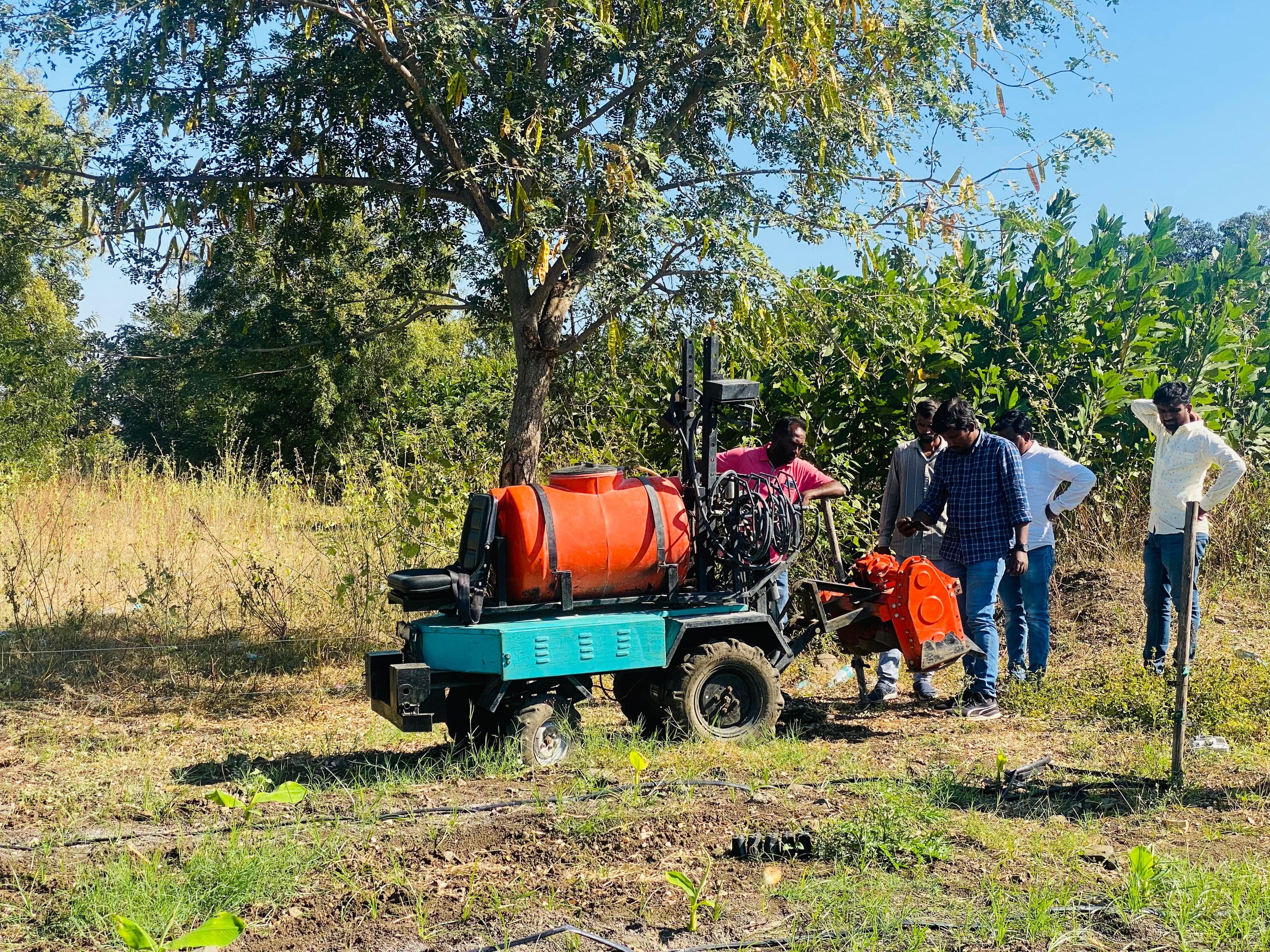
Field testing of AI enabled electric robot
These patterns around value capture spill over into rural labour markets as well where precision agriculture changes who does what work, rather than simply removing jobs. The risks are especially high for landless workers who depend on casual wage labour. Automation can take over repetitive tasks such as land preparation, spraying and parts of harvesting, reducing peak-season demand for low-skilled labour. New roles do emerge-for machine operators, service technicians and data-related functions but these require skills and assets that many landless households do not have easy access to. Without parallel investments in skill-building, labour protections and alternative rural livelihoods, there is a real risk that precision-oriented tools widen the gap between land-owning farmers who can invest in technology and landless workers whose bargaining power in local labour markets is already weak.
Field performance of specific AI applications underlines how dependent outcomes are on context. AI-powered crop disease detection tools often report very high accuracy in controlled settings, but this drops in actual fields where shadows, mixed backgrounds, tilted leaves and poor lighting are the norm rather than the exception. Studies point to a gap between lab accuracies in the 95 – 99 percent range and real-world performance closer to 70 – 80 percent, with even larger uncertainties for crops and diseases underrepresented in training data. On top of that, cloud-based processing requires stable connectivity, which many farms do not have. In their current form, these tools work best as a first screen to flag potential issues for field staff, with simple guidance on image capture, some offline capability and a human layer that checks the diagnosis before farmers act.
Weather and climate advisory services show a more consistently positive story and point to where AI is already fitting into existing decision-making. When forecasts are reasonably accurate and arrive in simple, timely, local-language formats, farmers do adjust how they manage rain-fed, monsoon-dependent systems. Long-range monsoon pilots for instance have seen farmers shift sowing dates, crop choices and input use based on onset signals, with better yields, fewer losses and higher incomes compared to farmers without such information. AI-based monsoon onset services delivered over SMS have given farmers location-specific signals about when continuous rains are likely to start, helping them decide whether to plant, wait or switch crops, particularly in dryland regions. But even here, the story is conditional, if forecast skill, last-mile delivery or trust break down, farmers switch back to traditional indicators and local heuristics.
On the policy side, there are a few practical moves that would immediately make AI tools for farmers more trustworthy and safer to use. One is formal certification led by ICAR and state agricultural universities. Any advisory tool marketed to farmers should go through multi-season, multi-location field trials, with performance benchmarks by crop, region and use case published openly before claims of accuracy are made. Second is basic transparency on data and models where every advisory should carry at least the model and version, broad data sources, confidence bands and key assumptions, with independent audits and periodic recalibration across agro-climatic zones, all linked back to consent and data rights frameworks such as AgriStack and the DPDP Act. Finally, treat smallholder users more like consumers in other regulated sectors with clear rules on liability for harmful advice, standard terms in simple language, accessible grievance systems and minimum standards drawn from global principles on responsible digital agriculture. Smallholder farmers should not be the testing ground for unproven algorithms.
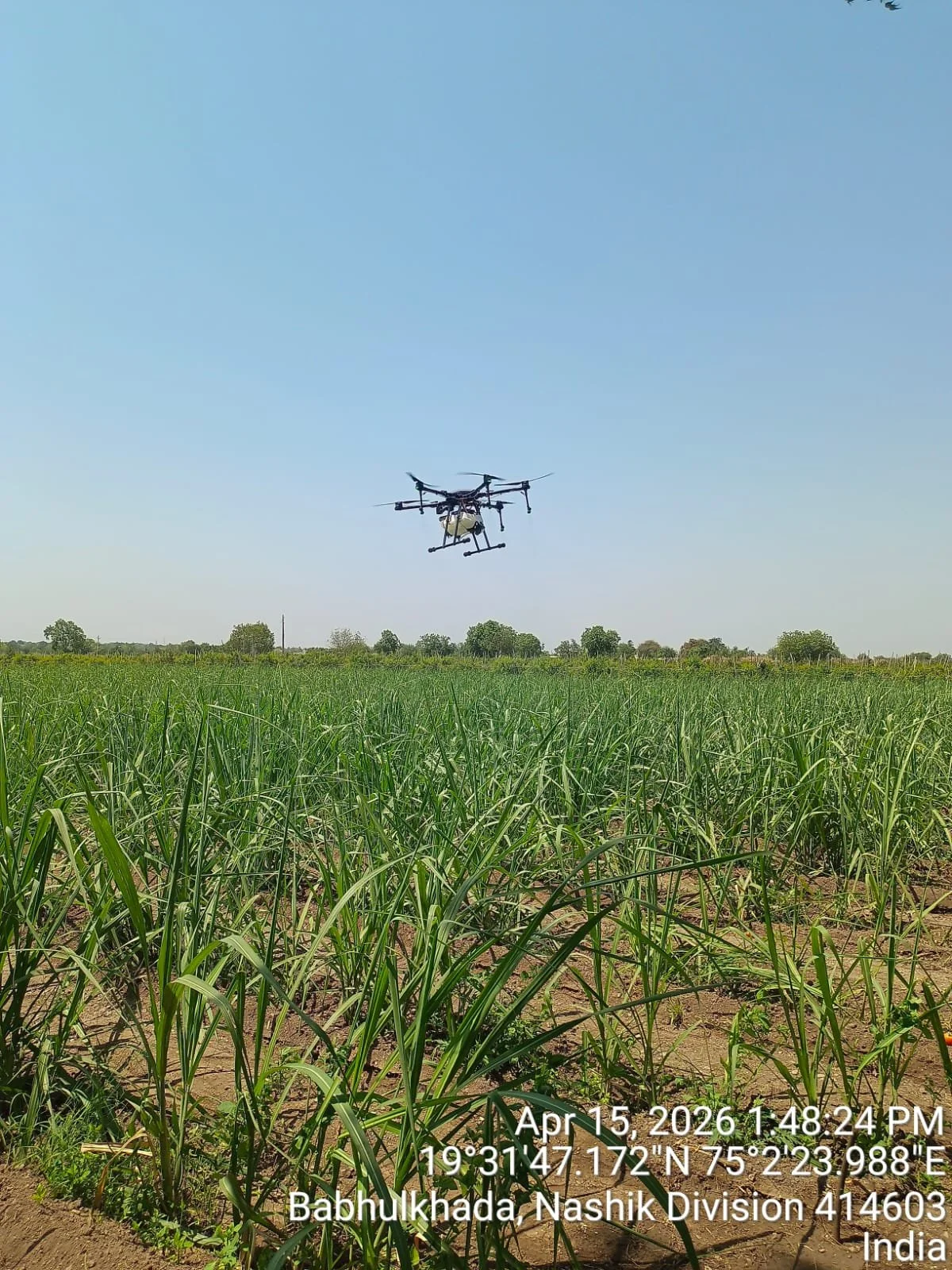
Field testing with drone technology
Measuring success also needs to move beyond single metrics. Farmer net income is a good anchor because it pulls together yields, costs, prices and risk into one number that matters to households. Yield increases on their own can be misleading if they come with higher input costs or more debt. Alongside net income, it helps to track input efficiency (water, fertiliser and pesticide use per unit of output) and production costs per hectare over time. On the usage side, adoption rates, user satisfaction, decision confidence and time saved tell us whether tools fit into real decision cycles rather than sitting on the sidelines. Environmental indicators such as soil health trends and emissions per unit of output matter for the longer term. These need to be tracked systematically through trials or panel studies that compare users and non-users over multiple seasons.
One area where AI is already clearly changing the equation is communication and outreach, and this cuts across many of the constraints described above. AI can sharply reduce communication costs by enabling voice and text services in local languages, which in turn cuts down the need for human translators and repeated field travel. Platforms such as Bhashini are already powering multilingual voice-based systems like Bharat-VISTAAR, MahaVISTAAR and FarmerChat, which let farmers call in from basic (non-smart) phones and get real-time information on weather, markets, pests and government schemes in more than twenty Indian languages. Under the hood, this rests on Automatic Speech Recognition, Natural Language Understanding and Text-to-Speech, but for farmers what matters is that personalised, dialect-level advice now reaches them at almost zero marginal cost per query.
Closing the remaining gap between what is possible and what is actually happening on the ground will not come from any single tool. It will depend on how all these elements – access, data, economics, labour, regulation and communication, come together in specific places. Field practitioners, researchers, technology providers and policymakers will have to work together to design tools that start with the smallholder farmer in mind, are tested rigorously, and sit inside fair and transparent institutional arrangements. Early efforts by multiple organisations, including the Evergreen Innovation Platform, show that this kind of grounded, collaborative approach is possible when goals and incentives are lined up with what farmers themselves are trying to achieve.
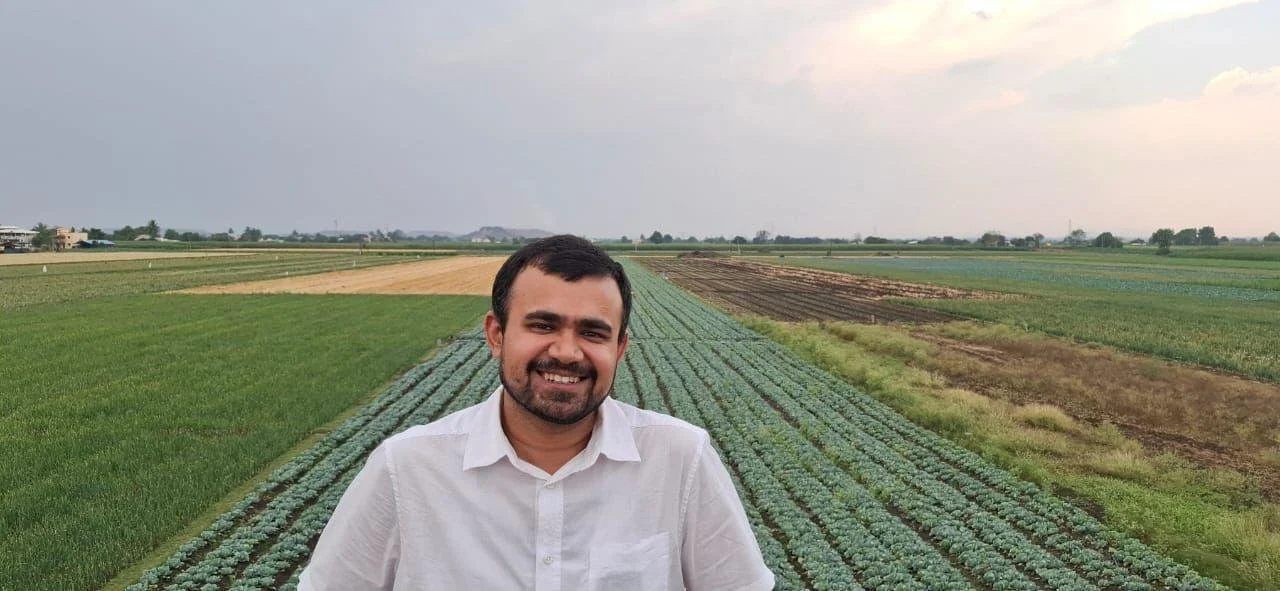
Vikas Mishra,
EIP Business Director India
Vikas is a seasoned Innovation Management professional with over a decade of experience in cultivating strategic partnerships, empowering startups, and spearheading advocacy efforts primarily in climate and agriculture.